Showing posts with label Art. Show all posts

Monday, April 5, 2010


Of cartoons (eventually)

Last week the Lady in his Life and Malcolm made it to 13 Lincoln's Inn Fields for Sir John Soane's Collection.

This ought to be on the short-list for any visitor to London: get there early to avoid a queue (and it's free, though they solicit a contribution). Being not a visitor, but a permanent London resident, it has taken Malcolm many years to get there.

Since there is a perfectly good detailed description (and excellent panoramic viewer) on line, we can dispense with that little lot.

The absolute stonker is the opportunity to view all eight episodes of Hogarth's The Rake's Progress, then turn around and take in all four of An Election (as at the top of this post, the third pane).

In that same Picture Room there is the odd "Raphael" (though probably not), a Watteau, numerous beautifully-drawn Soane architectural drawings, and a delectable Turner water-colour. And you get them all at one standing.

Of course there is more to come: three Canalettos (Riva degli Schiavoni, The Rialto Bridge from the North and Piazza S. Marco) down the other end of the corridor.


Back to the present day


But it was those Hogarths that came to Malcolm's mind with today's newspapers.

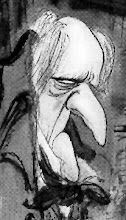
Yes, it is a bit of a stretch from Hogarth to Martin Rowson, but the sheer complexity, the busy-ness of his cartoon for today's Guardian deserves considerable respect:


The more one looks, the more one sees: the altar-boys, the nod to Kurt Westergaard. Was it an effective cartoon? Well, view the Guardian's Comment is Free for evidence.

To round off the morning, The Times had Morten Morland's pertinent dig at Cameron's weekend problems:All-in-all, a visual feast. Sphere: Related Content

Monday, February 22, 2010

The lists, the lists are driving me bleedin' insane!

We'll get to the lists in a while. By way of intro, Malcolm was considering Mick Fealty, Lord of the Manor at Slugger O'Toole, trying to extrapolate from the Willie O'Dea resignation to a metaphysical consideration of how the media mediate (or, in the O'Dea case, how the establishment manage to ignore an imminent train-crash).

Those a whit distant from recent happenings in Caitlín Ní Uallacháin's right little, tight little Three Green Fields might need a quick update.

O'Dea! Oh, dear!

O'Dea (above, right) has been one of the cuter characters in recent Fianna Fáil history. He is, among that mixed bag of intellects, quite a bright guy: a lawyer and accountant. He has lectured at tertiary level, and remains a columnist for several Irish prints. He has been a TD for some three decades, was distinguished as one of Charlie Haughey's intra-party opponents, and has the throat of Limerick politics in a vampire bite.

For the last six years he was Minister of Defence in two Fianna Fáil governments: not in itself a great mark of distinction. O'Dea had done some good work at Education; and might reasonably have expected a better post. After all, Ministry of Defence is hardly the grandest office of state in the Twenty-Six Counties. Still, a FF Cabinet has to be a balance of many regional and ideological conflicting interests: O’Dea happened to tick many boxes. Moreover, the man evidently relished and cavorted in the job.

Then, in a local election campaign, O'Dea confided to a journalist that a prominent Sinn Féin candidate (subsequently re-elected) was involved in the running of a brothel. Ahem!

O'Dea at first denied he had made such an allegation, and swore to the same in an affidavit, only to be confronted with a recording of him doing just that. Oops!

Last December, the matter came to Court. The affidavit stood. Then O'Dea had to make a crawling apology, a specious excuse, and cough up a six-figure sum (according to the Sunday Times). Ouch!

Finally, the Opposition made an issue of the matter. Part of the delay is that Dáil Éireann has become a part-time legislature: part because nobody in the small world of Irish politics likes to stir noxious turds, lest they come back to haunt.

Last week, under pressure from Fine Gael (getting under the bar five seconds before Labour), the Cowen Government went for a vote-of-confidence. The government scraped home on the Ceann Comhairle's casting vote. Half a dozen TD's managed to absent themselves: Trevor Sargent of the Greens managed to be pre-booked for an unmissable engagement ... at an organic food fair. Indeed. Sargent's inability to attend could be typical of the Green point-of-view: they felt they had been "bounced" into the vote-of-confidence by Cowen.

O'Dea then resigned. There remains considerable contention about whether he walked, was pushed, or if indeed the Greens gave an ultimatum. If so, for once, the Greens were less of their usual “more of a dirty yellow colour” (© The Goon Show).

Listing to lunacy

None of that is directly relevant to Malcolm's other thought. This emerged from Fealty's philosophising about how the media, by inclusion, omission or emphasis, mediate the public agenda.

There is little new, or particularly profound in this. The mediaeval illiterate peasant was constrained to a horizon bounded by local gossip, the local parish priest's semi-literate theology, and the occasional passing pedlar. As information sources have grown exponentially, we increasingly and necessarily impose filters for ourselves. So we choose our sources by interest, by prejudice and by habit: Fox News or Russia Today, the Irish Times or the Miami Herald, Gay News or L'Osservatore Romano. Only one of which will have addressed the O'Dea business.

Malcolm, inevitably, found himself further trivialising the argument by considering the media's mania for lists. This is the particular unique-selling-point of the arts and entertainment pages, ultimately reduced to that inevitable five-star ranking.

At the eggheaded end, the likes of the Times Literary Supplement each Thursday not only reviews but fails to do so. This prescribes the scope of what literature is "acceptable" to that particular periodical and its adherents. That matters little, since there are other competing outlets, though it is clear that certain writers are "established" by being featured in those pages, while others are excluded. Reviews are inevitably nuanced: very few say"must read" and equally few are stinkers — though, last week, Heather O'Donoghue's magisterial belittling of Robert Ferguson was a gem.

At the popular="pop" end, the need to encapsulate creates more serious problems.

At its best, such an approach can be a classic: Walter Kerr's 1951 put down, for the New York Herald Tribune, of John Van Druten's I Am a Camera ("Me no Leica") being the gold standard, as acerbic as anything from Dorothy Parker. The effect of Kerr's cryptic comment depends considerably on the reader recognising that I am a Camera is adapted from Christopher Isherwood's Berlin experiences. And, in turn, went on to be the basis for the phenomenon that was the musical and film Cabaret): thus producing the curious sequence of a decent pair of books provoking a mediocre stage adaptation and a great movie:


But those lists!

Yeah, well take the nadir achieved by Rachel Campbell-Johnson doing the "New Shows" for the Playlist supplement of last Saturday's Times. This is a page headlined by Henry Moore at Tate Britain, with Ron Arad featured further down page. We are also invited to consider posters from the wartime Ministry of Food, at the Imperial War Museum, and the Design Awards at the Design Museum. To this mish-mash, Campbell-Johnson appends a side bar of her "Critic's Choice". To achieve the full depth of the bizarre, these are worth taking in the reverse order established by Miss World competitions:
5. Dexter Dalwood's pai
ntings and collages ... exploring the concept of "history painting" at Tate St Ives;
4. "Rembrandt in Focus", which sounds like making a commercial for a brand of make-up, but is a single portrait of Catrina Hooghsaet [left] on loan from Penrhyn Castle, together with etchings at the National Museum of Wales;
3. A major show of more than 120 images spanning the 70-year career of Irving Penn , at the National Portrait Gallery;
2. We are invited to Gaze into the giddily decorative surfaces of some of the best-known works of Chris Ofill (yes: the elephant turd man) at Tate Modern; and ...
1. Work by the
the Armenian immigrant whose paintings were as powerful and important as he was mysterious. That's the typographic-disaster-waiting-to-happen, Arshile Gorky ("crazy guy! crazy name!" © Glenda Slagg), also at Tate Modern. Why is Malcolm unimpressed by this one, when opposite is a full page advertisement for a Times+ "exclusive private view" at £10 a ticket?

Any way one addresses it, there's a fair bit of mediation being done there.

Sphere: Related Content

Sunday, January 3, 2010

Mine's a Henry

John Armstrong turns the odd crust with a Saturday column on Fine Art & Antiques for the Irish Times. Today he reviews the last, rather dismal, year and finds the second-highest price of an Irish painting, at auction, was Sean Keating's The Angelus: two figures in a west of Ireland landscape. It went for €125,000: and nice enough.

Turn to page 14 to find Sean Keating's son, Justin, leading the obituaries. Justin was one of the New Irish Labour figures of the late 1960s, along with the "Cruiser" and David Thornley. All now gone before.

The best selling painting at auction, going for a cool €290,000 (and well worth every cent) was Paul Henry's gorgeous The Fisherman's Cottage. Henry cranked these out at a rate of knots. It's not one of his true gob-smackers, but it's far too good for the downstairs loo.

Despite every blatant hint, Santa annually fails in his bounden duty to drop a juicy Henry into Malcolm's stocking. Sphere: Related Content

Monday, September 14, 2009

The not-so-good and the not-so-great, number 18: Eliza Gilbert

Malcolm had been relishing getting to this one.

Then, last Thursday, Frank McNally (who else?) in his Irishman's Diary, got there ahead.

Now, Frank's piece seems not to be on-line (or will have disappeared behind the subscription barrier), but his opening paragraph explains all:
Among Munich’s lesser-known tourist attractions is the Schloss Nymphenburg's "Gallery of Beauties": a collection of winsome female portraits commissioned by a 19th-century king of Bavaria, Ludwig I. The gallery thereby combines two of that king's main obsessions, women and the arts. And naturally it includes a picture of his greatest obsession: the Irish-born femme fatale, Eliza Gilbert, better known to the world as Lola Montez.
Miss Eliza Gilbert ...

It is generally agreed (the DNB has it vaguely, and most writers leave it at that) she was born in the County Sligo in 1821. To be more precise, it was at the Grange on February 17th. So let Malcolm start by backtracking a bit.

The 25th, the King's Own Scottish Borderers, arrived at Queenstown on Christmas Day, 1818: among them, Ensign Gilbert. He took up with an apprentice hat and dress-maker in Cork City: the teenage Eliza Oliver. Ahah! Malcolm hears you say: the link to the previous post! Indeed: it's good to see you are all paying attention. Miss Eliza Oliver was one of four children born of the long-term, but unsanctified connection of Charles Silver Oliver (whom we met before) and Mary Green.

Ensign Gilbert and Miss Oliver married on 29 April 1820: the bride was fifteen years old. Gilbert was then posted to Sligo, where his daughter was born; but her baptism was on 16 February 1823, at St Peter's in Liverpool. By then, the 25th were on the way to India, and the Gilberts with them. Soon after, Ensign Gilbert was dead, from Indian cholera, and his young widow quickly remarried: her new spouse, 45-year-old Lieutenant Pat Craigie.

The child Eliza, aged five, was quickly despatched home to her step-family in Montrose, where she showed early promise, offending her elders in kirk, and running naked down the street. The Craigies packed her off to a series of boarding-schools, all of which were severely taxed by Miss Gilbert. Eventually, aged sixteen, she eloped with Lieutenant Thomas James of the East India Company.

... Mrs Thomas James ...

They were married in Rathbeggan, Co Meath, where Thomas’s brother was the parson. Eliza, in her memoirs, described life in Meath as:
hunting, eating, hunting, tea... I wished for nothing more intensely than to be abducted once more, but this time not by a potential husband but by anything or anyone who would rescue me from this deadly monotony.
Lieutenant James had to return to Calcutta. He spent much of the voyage drinking porter, belching and snoring. On arrival in Calcutta he took up with another woman. Mrs James, perhaps none too distressed, pocketed all he had and promptly returned to England. The return trip was passed in the company of well-connected Lt. George Lennox, Aide-de-Camp to Governor General, Lord Elphinstone. Eliza was upwardly mobile, if from a horizontal position.

In London, she hit the stage running (or at least dancing) as:

... Donna Maria Dolores de Porris y Montez

Lords Malmesbury and Brougham, two conquests in many, prevailed upon Benjamin Lumley, the promoter at Her Majesty's Theatre; and on 3rd June 1843 she debuted there in a gala performance.

At first the critics fell for it. The Times approved her:
Spanish dance by a Spaniard, executed after the Spanish fashion.
The Evening Chronicle went further:
Her dancing is little more than a gesture and attitude, but every gesture and attitude seems to be the impulse of passion acting on the proud and haughty mind of a beautiful Spaniard; for she is exquisitely beautiful, in form and feature, realising the images called up by a perusal of Spanish romance. her dancing is what we have always understood Spanish dancing to be - a kind of monodrama.
"Lola", as she now became, represented herself as a betrayed refugee from Seville, in need of protectors, the richer, more grand and more generous the better. Already her strike-list included the son of Prime Minister Peel, Marius Petipa (creator of Swan Lake and The Nutcracker), the odd ambassador, and various literary and business types. She habitually carried a riding-whip to punish any disrespect and on one occasion she took a revolver in pursuit of a rapidly-departing lover who had failed to reach the mark.

Love for sale, and Europe at her feet

In St Petersburg, the Czar found a private audience with her worthy of a thousand roubles.

In Dresden she danced on the table before royalty and deposited the consommé into a ducal lap. The host, Franz Liszt, no laggardly lover himself, became so exhausted by her demands that he locked her in their hotel room, leaving a sum at the check-out to pay for the inevitable mayhem.

In Poland, the Viceroy offered her his country estate and a small mountain of diamonds. When she repulsed him (on grounds of age and appearance) he tried to terminate her engagements. She denounced him from the stage, thus fomenting a significant riot.

Old love, new love,
Any love but true love


If there was one in particular for her, she claimed it was Alexandre Dujarier. He was co-editor with Émile de Girardin of La Presse, the innovative Parisian journal which had fostered the careers of the likes of Balzac and Dumas (another of Lola's passing fancies). Not long after the liaison began, Dujarier was killed in a rigged duel. His opponent, Jean-Baptiste Rosemond de Beaupin de Beauvallon (phew!) was put on trial in Rouen. Dumas arrived to give evidence in an open carriage. The star of the show, mais naturellement, was Ms Montez. Dressed in showy widow's weeds, she described how Dujarier's corpse had been delivered to her in a carriage. Then she plucked from her bosom Dujarier's final note to her:
I am leaving to fight with pistols. This explains why I wanted to sleep alone and also why I didn't visit you this morning. I need all my self-possession and I must avoid all the emotions seeing you would have stirred. At ten o'clock it will all be over and I shall rush to embrace you, unless ...
Despite all, the verdict was not guilty.

The Countess of Landsfeld

Seven months later Lola had her greatest hit.

Her stage performance in Munich had been so execrable, the manager instantly terminated the engagement. Lola stamped off to complain to the highest authority: King Ludwig himself. This, let us be reminded, is not "Mad" King Ludwig II, the Swan King, but his grand-father (left).

Still in her stage costume, she forced her way in the King's private study, demanding "justice". Ludwig, apparently trying to defuse things, enquired whether her figure was a work of nature or a work of art. Lola snatched a pair of scissors off the King's desk, hacked her dress open to the waist, and instantly had his full attention.

Within a month of landing in Munich, Lola was on the royal pay-roll: 10,000 florins a year (4,000 more than the chief minister). Ludwig had built her a small palace (16,000 guildern), bought her a Parisian coach (3,300 francs), porcelain, furniture and much, much more. He impoverished his own family: the queen and his eight children survived on rye bread. Lola's allowance was doubled.

Lola effectively took over the government of Bavaria. Ludwig graced her with a title, Countess of Lansfeld. She took on the Jesuits of arch-Catholic Bavaria. She introduced the Napoleonic code of law. She needed armed protection. She recruited a student fraternity, the Allemania, as her private spy-ring, reporting gossip: their reward was naked parties in which she was paraded shoulder-high -- in one of these, her bearers cracked her skull against the chandelier and left her unconscious. None of this suppressed her continuing sexual adventures, including one with Ludwig's illegitimate 21-year-old son.

By 1847 the situation was about to boil over. Metternich tried to buy her off. Palmerston's nephew could report back to the Prime Minister that:
everyone is alarmed ... The exasperation of all clases is so great that the idea of dethroning the king is daily gaining ground.
On 9 February 1848 a riot, Metternich's fall-back ploy by employing rival student guilds, continued over some days; and ended with the looting of Lola's house. She was deported. Ludwig followed soon after: on 19th March, abdicating in favour of his son, but still loyal to his ever dear Lolitta.

In 1848, the Year of Revolution, Lola Montez had, single-handed, and uniquely, generated the overthrow of a leftist government by the militant right.

Frank McNally sums up the rest
The show had to go on, meanwhile, and Lola duly packaged the Bavarian chapter of her life-story into a stage play. She toured Europe and Australia and the US, a country she found more amenable to her large personality and in which she eventually settled.

Her life remained turbulent, however. When men were not being struck by her beauty, they were being struck by her in other ways. She was a serial assaulter: slapping, punching, kicking and sometimes resorting to other weapons as the mood took her.

When an Australian newspaper wrote about her critically on her tour there, she horsewhipped the editor.

Of her three marriages, the last two were bigamous and none was long-lasting. But then finally she did reform, spending the later part her career as a living morality tale, raising money for prostitutes charities, and going on lecture tours. Among her speaking engagements was one in Dublin's Rotunda. But soon afterwards she suffered a stroke and her highly eventful life ended in 1861, when she was not yet 39.
What that skims over is that Lola was a success to the end. Her stage play, Lola Montez in Bavaria, may have been lightweight, "with feeble gags thrown in"; but it continued to put bums on theatre seats across three continents.

One lover, who failed to provide satisfaction, went overboard mysteriously, off Fiji, with rumours of cannibalistic rituals.

She opened a saloon in the California gold-rush frontier: the floor-show was Lola at her most -- err ... -- unrestrained. Some letters, found after her death, imply it was all part of a plan to separate California from the Union as an independent -- wait for it! -- Lolaland. However, her Californian home at 48 Mill St, Grass Valley, CA, is preserved as State Historic Landmark 292 and a couple of lakes are named for her (right).

When she went on the lecture circuit she could command a better fee than even Dickens.

At the end she discovered religion, affecting Swedenborg sincerely but with no knowledge. On her death-bed she received a message from Ludwig, that it was:
a great consolation to hear her dying as a cristian [sic]. LM was a much distinguished lady.
And what's left?

Malcolm has singularly neglected one of the lady's conquests -- Harry Flashman:
one of the most remarkable women in my life—or in the life of anyone in the nineteenth century, for that matter. Who could have guessed then that Marie Elizabeth Rosanna James would turn a crowned head, rule a great kingdom, and leave a name to compare with Dubarry or Nell Gwynn? Well, she was Flashy's girl for a week, at least, which is something to boast of.
The rest, if not history, is Royal Flash, the second outing (published 1970, and as fresh as ever) of George Macdonald Fraser's anti-hero, and the most readable account anywhere of the Schleswig-Hostein Question. Sphere: Related Content

Monday, August 24, 2009

Swingers

A piece in the current issue of The Economist
(which has just come up on-line in the e-mail reminder) is about London's Wallace Collection:
The generously proportioned rooms envelop one of the great surviving privately formed collections of 18th-century French art, furniture and gold boxes. This ensemble of opulent objects and lyrical pictures is displayed in rooms “papered” with intensely coloured silks. Crimson, emerald, coral and sapphire walls sing in harmony with the glazes of the Sèvres porcelain for which the collection is justly famous.
Only in passing does the piece remind us of one of the star attractions:
There are also gold boxes, elaborate gilded bronze mounted clocks, paintings by Boucher (including his portrait of Madame de Pompadour [see above] ... , Watteau and Fragonard. The latter’s famous “Swing” appears simultaneously light-hearted, lascivious and cruel.
The main cruelty there is denying us the main event, which we came for. So here she is:


And she is gorgeous.

On one level, it is the eternal triangle: the young miss between her sugar-daddy (who, for an additional frisson, is togged out sub-fusc, and possibly as a priest) and the young swain. Cupid looks on:
he is a statue well-known at the time, Falconet's Silencing Cupid, and pointedly owned by Madame de Pompadour, patron of artists and the King's official mistress.

At the height of her swing the girl loses, or kicks off her shoe --
which, apparently, implies the loss of virginity -- towards the Cupid, who is shushing her. The young man is, ambiguously, hiding in the undergrowth or caught in a thorn-bush, presumably to imply his torment. He is lying with a rake, which may imply his intentions are less than honourable. Then we notice his pose: it is that of Michelangelo's Adam from the Sistine Chapel:


Almost inevitably there has to be a story behind this picture.

Gabriel-François Doyen made a belated reputation for himself, bashing out religious themes (he had the good sense to relocate to Catherine II's St Petersburg in the French Revolution). On 2nd October 1767, when he was really making a name for himself, he fell in with the playwright and songsmith Charles Collé, who was keeping a diary (published in 1805, to the great surprise of all those who had confided in
Collé).

Collé records that Doyen had been taken aback by a visit to a noble courtier (probably the Baron de Saint-Julien, who was Receiver-General of the Clergy)
who had been accompanied by his bit-on-the-side:
"He started by flattering me with compliments", began Doyen, "and ended by assuring me that he was anxious to have me create an image, the idea of which he was going to outline.

" 'I should like Madame (indicating his mistress) on a swing which a bishop is pushing. You will depict me in such a way that I would be able to see the legs of the lovely girl, and even better, if you want to spice up your painting a bit more ...'

"I confess, M. Doyen said to me, that this proposal, which I wouldn't have conceived possible, ... perplexed me and left me speechless for a moment. I pulled myself together and said to him almost straight off: 'Ah! Monsieur! One should improve on the basic notion of your image by making Madame's shoes fly off and having some cupids catch them.' "
It was not Doyen's line-of-work, so he passed the idea on to Fragonard, who himself was in transition from religious scenes to more spicy stuff.

The scene is sheer voyeurism, but, as with all rococo, we can look closely for hidden meanings.

The scene is a garden, which takes us all the way back to Genesis, via the implications of The Roman de la Rose and similar texts. We have lots of roses: not just a feminine symbol but a reminder of the transience of beauty, which is another reading of the gnarled oak tree from which the swing, and its split-second image here, depends. The sculpted putti are riding one of the dolphins which pulled Aphrodite's chariot, and thereby imply that the situation has an unchanging eternal nature. The pet dog, a symbol of animal passion, tries to climb the fence and yaps at the girl.

Fragonard knew he had a winner here, and did the subject three times. The version in the Wallace Collection was the original, first owned by the Baron Bollioud de Saint-Julien, then sold to the Duke of Morny, on whose death in 1788 it was acquired by Sir Richard Wallace. The girl in a blue dress is owned by Edmond James de Rothschild; and a smaller version by Duc Jules de Polignac. Nicholas De Launay did an engraving of the picture (and advertised it for nine livres in 1789), when it seems to have acquired its longer title: Les Hazards Heureux de L'escarpolette.

The Economist does us well with its "cultural" stuff.
Sphere: Related Content

Saturday, February 21, 2009

Malcolm gets lippy

This gorgeous thing has been illustrating reviews over the last few weeks:


The
Wall Street Journal featured it, back on 5th January. It is here again in the 2nd March issue of Time magazine.

It could have made in the ateliers of the early Twentieth Century, and be appearing in a Cubist exhibition. The shape is uncannily like a flamingo, especially John Tenniel's drawings for Alice in Wonderland.

In fact, it emerged from an archaeological excavation in Anatolia.

It is, incredibly, over three and a half millennia old.


For a few more days it can been seen at the New York Met's current show: Beyond Babylon: Art, Trade and Diplomacy in the Second Millennium, BC.

Apart from admiring it, Malcolm mentions it here because he takes lip-smacking alliterative delight in enunciating its title:
Spouted Hittite vessel.
Sphere: Related Content
Subscribe with Bloglines International Affairs Blogs - BlogCatalog Blog Directory
 
Add to Technorati Favorites