Showing posts with label Sinn Fein. Show all posts

Monday, May 31, 2010

Dreary steeples: 2

Fermanagh & South Tyrone ... yet again


If there is a competition for the most MPs (some eleven — which might yet reach the round dozen — over six decades) elected by a single constituency, in the shortest period of time, this one deserves consideration.

It is a vast rural stretch (see wikipedia's diagram, right). To the east it oh-so-nearly doesn't quite touch Lough Neagh. At the other end a finger-tip stretches for Bradoge Bridge, where the townland of Manger is the UK's Wild West (apart from sweet Rockall). In that fastness we are barely a spit-and-jump out of Bundoran.

Equally, politics is a weird business, wherein strange near-approximations to human life survive and prosper. But, for a prime selection of bizarre candidates over the years, this one has to be a runner. As Gawin Douglas said of his Eneados of 1513 (and Burns prefixed as the text above Tam O'Shanter):
Of Brownyis and of Bogillis full is this Buke.
Here's the sequence:
  • 1950 General Election: Cahir Healy (an interesting character, who will inspire a subsequent post).
  • 1951 General Election: still Cahir Healy, holding the seat on an increased majority of 2,635 out of 62,797 votes (an astounding 93.4% turn-out).
  • 1955 General Election: Philip Clarke taking the seat for Sinn Féin by 261 votes in a straight fight;
  • August 1955: an electoral court disqualified Clarke as a convicted felon (doing time for IRA activities) and awarded the seat to his defeated opponent, Lord Robert Grosvenor (later the 5th Duke of Westminster).
  • 1959 General Election 1959 Grosvenor held the seat with a huge majority over Sinn Féin.
  • 1964 General Election: James Hamilton, the Marquess of Hamilton (cousin of Grosvenor, and a major landowner in the constituency) saw off Aloysius Mulloy, standing as an "Independent Republican". NILP and Liberals split the vote.
  • 1966 General Election: the nationalist vote was split by a "Unity" candidate (J.J.Donnelly) and Sinn Féin's Ruairí Ó Brádaigh. Even so, Hamilton was back on a plurality.
  • 1970 General Election: Frank McManus stood as a "Unity" candidate, and took the seat off Hamilton. There was again a remarkable turn-out: over 92%. Not many were deceived by MacManus's anodyne party label: one brother, Pat, was killed in an IRA "own-goal" bombing in 1958; another is Father Seán McManus of the Redemptorists, founder of the Irish National Caucus.
  • In the first election of 1974, the nationalist vote was shared pretty evenly between McManus and Denis Haughey (the SDLP's long-term, all-purpose man-beyond-the-Bann). This let the sulphurous Harry West in for the Unionists.
  • October 1974: Frank Maguire (an "Independent Republican") cleaned up, 2,500 ahead of West, with a nugatory Maoist in for a laugh. Maguire had been the IRA Commander in Crumlin Road gaol, during internment. Even so, he was not a total abstentionist: famously he attended the last rites of the Callaghan government in 1979, to "abstain in person".
  • 1979 General Election: Maguire was returned despite a four way split (with an Alliance candidate making up the numbers). Austin Currie, as an "independent SDLP" candidate creamed off over 10,000 nationalist votes, but Ernest Baird, the chemist and hatchetman for the Vanguard Unionist rump, did the same for the unionist vote.
  • Frank Maguire's death in March, 1981, caused a famous by-election. Bobby Sands, on hunger strike in the H-blocks, squeezed past Harry West in a "straight" fight (thoughthere was little straight about the campaigning). Sands was dead four weeks later.
  • So a further by-election was held in the August. Since the law had changed, to prevent prisoners being nominated as candidates, Owen Carron (who had run Sands's campaign) won as the Anti-H blocks candidate (and as an abstentionist) over Ken Maginnis.
  • 1983 General Election: the SDLP put up Rosemary Flanagan, split Carron's nationalist support, and let Maginnis in. With SDLP continuing the split for the next four elections (the Unionist mass resignations causing 1986 by-elections and then the 1987, 1993, 1997 General Elections) Maginnis was re-elected, until he stood down for 2001 and went to the Lords. Perhaps Maginnis was recognising that the 1997 redistribution had moved the constituency fractionally in favour of the nationalists.
  • In 2001, again on a four way split, Michelle Gildernew was the faintest scintilla of a nose (just 53 votes) ahead of James Cooper for the UUP. That was despite the ever-present GAA-man Tommy Gallagher putting up for the SDLP (his third of four successive runs) and hoovering up ten thousand votes.
  • 2005 General Election: Michelle Gildernew had an easy ride, and a 4,500 majority, for Sinn Féin. This was because Arlene Foster inervened to take 14,000 for the DUP, pushing the UUP Councillor Tom Elliott MLA (who had been Cooper's agent in 2001, and should have known better) into third.
  • This time round, 2010, was the cliff-hanger. After much pushing-and-shoving, the DUP and UUP agreed Rodney Connor as an "independent Unionist". Since Cameron had made his daft commitment that the Tories be represented in every constituency, this involved a face-saving formula of words, that Connor would take the Whip on all non-constityency matters. Meanwhile, Fearghal McKinney, a transplant from Derry (not always a route to popularity in these parts) and local journo, thrust himself forward as the the SDLP candidate. Predictably he was squeezed out of serious contention. Even so, his 3,500 votes threatened Gildernew. After multiple recounts Gildernew was elected by just four votes. Connor was incandescent at the declaration, and is now pursuing his complaint through an electoral court.
Little of that will come new to anyone interested in this neck of the backwoods. Fermanagh & South Tyrone's shenanigans go through west-of-the-Bann political life the way letters go through seaside rock. Such recitals, though, help memory to be refreshed.

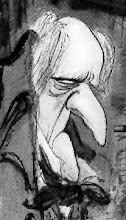
Malcolm, at the head of this posting, reached for Burns's Tam O'Shanter and Gawin Douglas on his Aeneid. That conceit now seems appropriate, for all sorts of reasons (some geophysical, some personal) when:
We think ... on the lang Scots miles,
The mosses, waters, slaps and stiles,
That lie between us and our hame,
Where sits our sulky, sullen dame,
Gathering her brows like gathering storm,
Nursing her wrath to keep it warm.
In Fermanagh & South Tyrone, even more than the generality of Northern Ireland's politics, wrath is warm, and revenge is eaten cold.
Sphere: Related Content

Thursday, October 1, 2009

Things not to say (number 94)

It is three days before the vote on the Referendum. You are billed to speak at the UCD Law Society on the Lisbon Treaty. The Chair is Bertie Ahern. It's in the vast O'Reilly Hall. Primetime and RTÉ are recording it. No Dublin journo of a political bent will miss this one. They've signed up a speaker from every main interest group: all the main (and less so) parties, Ganley himself, Cóir, ... This is stellar stuff.

Mission Impossible

Your task, should you chose to accept it, is to be Mary Lou McDonald (right, as the ventriloquist's dummy). Once you were Sinn Féin's golden girl: now the gilt's wearing off, and the guilt's showing through. Your seven minutes comes immediately after Ross Maguire of Generation Yes. He plays a stormer. This is a young feller (and a movement) to watch.

Now, you, Mary Lou, rise and begin:
Call me a simple soul, but ...
End to end, O'Reilly Hall resonates to a snort: part recognition, part total dismissal.

Cometh the hour ...

Cometh the man.

To rub salt in the wound, following poor little lost Mary Lou, up strides Garret Fitzgerald, heading into his ninth decade, but still capable of that machine-gun delivery. If Maguire rocked them, and McDonald lost them, Garret socked them and slew them. They loved it.

Payout

Boylesports, the bookies, have already paid out on the assumption that it will be "Yes". Paddy Power is now soliciting bets on the percentage of "Yes" votes: as of writing the odds are:
Yes 55%+ - 60%: 11/4
Yes 60%+ - 65%: 5/4
Yes 65%+ - 70%: 5/2.
It's all over bar the tallying? Sphere: Related Content

Friday, February 20, 2009

Green, green, it's green they say
On the far side of the hill.
Green, green, and I'm going away
To where the grass is greener still.


Barry McElduff has a problem (one for which Malcolm has some sympathy), and came up with a personal and partial solution, which he now regrets.

The problem remains.

Explain, Malcolm!

McElduff is an MLA for West Tyrone and Councillor in Omagh District. He is a nationalist and member of Sinn Féin (though, to the cognoscenti, the name and the location render this explanation otiose). The local boyos took it on themselves to paint post boxes green. McElduff expressed his approval of the redecoration. Outcry and general hoo-ha ensued. His political masters, who can be very persuasive, obliged McElduff to make a public and humiliating recantation.

That's the basic story: so a Malcolmian aside.

Quite why post-boxes should be seen as the ultimate symbol of national pride and tradition defeats our resident sage, philosopher and friend. Across the nation, long-redundant postboxes are preserved and ritually repainted to preserve the street-scene: one such is in Hampstead, NW3.

Early E2R boxes were blown up by the Scottish liberationists in the 1950s. This was on the specious grounds that Scotland had experienced just the one Elizabeth: thus reminding the rest of us that many SNP types are tartan Tories, with an essentially conservative, even feudal, mind-set.

Going postal

Yet, even in the UK it is possible to find green post-boxes. As the Letter Box Study Group (better believe it!) says:
Sometimes, older boxes or those which have previously been in poor condition have details such as the royal cipher picked out in gold, making for a splendid display. Disused or privately owned boxes can be found in a variety of colours, including black, white, green, blue and brown. Boxes in the walls of local Post Offices are often made of local materials to local requirements and may be bronze, brown or silver.
Even ordinary working letter boxes can be found in numerous different colours. Guernsey for example, paints all boxes blue. Some historical boxes on the British mainland can be found in green.
At Moorlynch, in Somerset, the local post-mistress insisted on repainting the box in her wall Harrodian green every time the Post Office painted it red: she wanted it to harmonise with the rest of her shop paintwork. Somewhere in the moorland wilds of Scotland Malcolm recalls an isolated green post-box, because a red one would be too glaringly out-of-place in a protected landscape.

As the LBSG implies above, the original colour for British post-boxes was green: red was only adopted from the mid-1870s. Nor is the red of the British post-box some brash-and-brassy sentiment derived from Georgian soldiery or the Union Flag. It is there, presumably, for the same reason that robins appear on Christmas cards, the early post-man's uniform red coat: hence they were nicknamed "robins" and "redbreasts". It is another piece of British tradition and mythology to be blamed on Charles Dickens & Co:
His portrait is an every-day picture of life, and yet not easy to paint. He is the very incarnation of alacrity, the embodied spirit of regularity and precision. Day by day, hour by hour, he is to be seen traversing with rapid step the limits of his own narrow district. The heavens may smile, or frown. Revolutions may shake the land ; or peace and prosperity gladden its children. Disease may wave its pestilent torch; or sudden calamity sweep away its victims. But the postman is still at his post. A diurnal dispenser of news. A kind of Hope in the Queen's livery, visiting every one in turn, and welcomed by all. A messenger of life and of death; of gratified ambition, or disappointed desire; of gracious acceptance, or harsh refusal. He is still welcome, for his presence, and that which he brings at least, puts an end to the most cruel of human sufferings- uncertainty.
It must come as an affront to any and every loyal Ulsterman to turn left out of Belleek, along the A47 Lough Shore Road towards Enniskillen. For just a few yards, across the bridge at Graffy, the road (suddenly re-designated the R47) is in the Republic. There, on the corner, is (or used to be) a green post-box, complete with royal insignia. To make the point even more blatantly, in the bad old days one might see an Arm na h-Éireann vehicle significantly adjacent. Bless!

The McElduff dilemma

The original Sinn Féin, not these latter-day wannabe saints and sinners, made nationalism work. Across the country, Republican courts operated, and people preferred them, and abided by their prompt and fair justice. In effect, long before the 1922 Treaty took effect, the first two Dála had evolved and implemented a parallel working State.

As Newton Emmerson, in the Irish News argues, that is one route for militant nationalist passive resistance:
Mr McElduff is much mocked for this focus on the everyday details of life in the United Kingdom but it is hard to fault his argument. Acquiescence to those everyday details is what enables any state, fictional or otherwise, to function. Imagine the chaos if 26 per cent of Northern Ireland’s adult population, equating to Sinn Fein’s vote at the last election, decided peaceably but firmly to do something as simple as not renewing their car tax. Quite apart from the lost revenue, the entire bureaucratic basis for the control and monitoring of vehicle ownership would collapse, taking the magistrates courts down with it.
Etc. Etc. (And the whole of Emmerson's piece is worth the visit.)

To Malcolm that's fair enough.

Except ...

The good people of the Republic, FF, FG, SF, Labour and Green, have been less than chuffed by Brian Lehihan's call to pay 21½% and Euro prices as an act of "patriotism". They have chosen to go north, pay 15% VAT and sterling prices. Equally, the tradesfolk of the North have not looked too shyly at the colour of the money crossing the border.

That's real life. That's everyday economics. It's also called giving people the choice. As with posting a letter: in the green box, it's €0.55 (say 49p). Take a dander across Graffy bridge, and save a third of the cost, even if the monarch's head offend, and the post-box is the wrong colour. Then it's a matter of competition: does the Post Office or An Post get you there quicker and safer?

It's the European Union in practice, for goodness' sake.

And, Malcolm suspects, the Irish lack-of-greenness is not so green, jejune and naive when we observe how "patriotic" Dell and its multi-national ilk have been. After all, Lenihan's budget argument was that all the cuts on health, welfare and pensions, all the imposts on consumers, employees and ordinary folk were justified to protect, preserve and promote the benign taxes on corporations.

But Dell saw things were greener on the other side of the Oder-Neiße-Grenze.

Brass tacks

The McElduff dilemma is not just one of postboxes and paintbrushes. It extends across the whole of community action. It embraces the need for ideologies in a changed economic climate, and is one facing all leftists in the island of Ireland, the PUP as much as SF. One even hears a DUP horn faintly blowing: did not Malcolm detect the great Reverend Doctor use the word "liberal" last week? And without obvious distaste!

The issue is how to make social -- even socialist -- alternatives attractive, and then work -- be it in 6, 26 or 32 counties. In other words, to make a society which is caring, sharing, and deserving. The flag-waving and sloganeering can follow later.

And that's an issue far bigger than just this posting.

So, altogether now:


It's not that easy bein' green;
Having to spend each day the color of the leaves.
When I think it could be nicer being red, or yellow or gold --
Or something much more colorful like that.
Sphere: Related Content

Thursday, October 11, 2007

The plump gentleman hasn't sung yet

The Newsletter is again running the story:
MP David Simpson has made an application at Parliament for an adjournment debate, where he plans to name a senior Sinn Fein member as a British spy and allege they were protected from prosecution in a murder inquiry.
The DUP man has put down a motion on 'Policing The Past In Northern Ireland'.
Simpson is, to be precise, alleging that:
... the Sinn Fein politician was involved in plotting the murder of his cousin, Frederick Lutton, near Moy in 1979.
This issue has been running for several months now; and so far Simpson has refused to name the person involved in the death of his cousin. He has, however, been adept in keeping the pot on the bubble.

All kinds of hints have been dropped: the unnamed killer is a "leading Sinn Fein member", and "a member of the Assembly". We have also been told he was one of those questioned at the time, because he lived close to the murder spot, etc.

cryptome put out a name on 20th August, which is known to the Sunday Times and most other media sources.

If it is of any help to other seekers of the truth, Malcolm recommends a visit to an earlier story from the Newsletter, dated the 23rd August:
MLA Francie Molloy has said he is taking legal advice, after a number of websites claimed he was the Sinn Fein man that the DUP will name in Parliament as a British agent who conspired in murder.

The veteran republican has said: “I am talking to my solicitors about it and they are handling it.
The real future interest in all this lies in whether the DUP hierarchs can continue to suppress Simpson, whose motives are mixed, but who was pointedly left out of the sweetie share-out of Stormont jobs and titles; and has a strong and consistent record on opposition to the power-sharing arrangements. Sphere: Related Content

Tuesday, May 29, 2007


Sinn Féin's election: the dog that didn't bark?
The Irish groan and shout, lads,
Maybe because they're Celts,
They know they're up the spout, lads,
And so is everyone else.
Hurray! Hurray! Hurray!
Trouble is on the way.
Thank you, Noel: don't call us, we'll call you.

At Slugger and elsewhere (politics.ie, and now at Mick Fealty's other home, comment is free, for examples) there is some serious debate going on (provided one tiptoes round the usual exchange of ritual insults) about:
  • why Sinn Féin fell so far short of expectations in the Irish General Election
and
  • where they go from here.
The general consensus seems to blame the disaffection of the Republic's electorate with all things to do with the Black North, but identify Gerry Adams's performance in the also-rans debate as a special factor. Those pesky dogs, the critics and pundits, are snapping at his heels.

Malcolm feels that this debate has a long way to go.

It wasn't only SF that underperformed: all the radical parties suffered similarly. So that we all know what we're talking about, here's the meat:
FF 78 (-3);
FG 51 (+20, neatly restoring their position in 2002);
Labour 20 (-1, and still going nowhere);
PD 2 (-6, and effectively wiped out, except as an adjunct to FF);
Greens 6 (no change);
SF 4 (-1, after barking big, a very small bone);
and the odds-and-sods 5 (-9).
It isn't quite a two-party system, but it's getting pretty close.

Now, in hindsight, the outcome should not greatly surprise. The electors were asked if they liked prosperity, a housing boom, full employment, and, after a nanosecond of thought, decided "It's the economy, stupid".

Seán O’Faoláin, writing in 1969, noted:

time was when common words on every lip in every Irish pub were partition, the civil war, the republic, the gun. The vocab of the mid fifties and sixties was very different — the common market, planning, growth, rates, strikes, jobs, education opportunities or why this factory failed and that one flourished.

That’s why the RoI moved on, while too many in NI didn’t, and still haven't. Forty years on from O’Faoláin, the “vocab” of SF and anyone else trying to occupy the radical left, north or south, needs to adapt again.

He didn’t recognise it at the time, but Malcolm, sitting in the public gallery of the Dáil of the early ‘60s, might have observed O’Faoláin's change: the old men were still challenging each other about which side they and their fathers had fought in 1922: the younger sparks (and newspaper columnists) were rolling their eyes, and backing the Whitaker Plan.

That produced a step-change in the growth of the Irish economy, directly accountable to successfully attracting foreign investment and dismantling the protection racket that was the Irish economy. Exports, especially to the European market, rose; and the Irish
economy continued to grow throughout the 1970s (and began to free itself from dependency on Britain). Despite two oil crises in 1973 and 1979, high public spending kept the supply side of the economy buoyant, with the GDP growing at 4% a year. The cost was a structural deficit.

By the 1980s, though, the RoI was back in the mire. GDP growth fell back to 1.5% a year. Unemployment soared: by 1987 it reached nearly 17%, and emigration was back. Worse still, this emigration was mainly of the educated and talented. A consensus emerged between government, employers and unions: the new policy was tax-breaks to suck in the investment, expenditure on education and training, and industrial harmony. By 1992, some 37% of US investment into the European market was coming to Ireland. By 2003 unemployment was down to 1.5%, and 65% of the population were working.

So, in 2007, with Ireland one of the top-four burgeoning economies, the last thing on the popular agenda was “change”. But:

… the present pleasure,
By revolution lowering, does become
The opposite of itself.
And what then?

There should be an opportunity for any party which can cobble a convincing programme to cope with after-the-boom, when the appetite for “prosperity” is sated, when the economy turns. At that point, the place to be is outside the tent pissing in. Which party is capable of that posture?

On the other side of the fence, SF, the Greens and the Trots are the only parties who have been left off the roundabout of power all these years (though both SF and the Greens would love to be invited aboard). Therefore they have been the only parties credibly capable of arguing for “change”.

And that is why Malcolm's reading of Adams in the also-rans debate was somewhat different. Adams seemed not to have, or didn’t know, an economic policy. He vainly tried to shift the argument to social policy. (SF’s social policy looks somewhat threadbare too, but Malcolm leaves that thought aside.)

There is a case to be made for a new social programme: social inequality is growing; there is a two-tier health service; Ireland (pace the UN Development Programme) has the highest level of poverty in the Western world, behind only the US; a fifth to a quarter of the population are functionally illiterate; and Ireland is observably becoming a less tolerant society. (Malcolm, generous to a fault, omits corruption from that list.)

The opportunity is going to be there. Malcolm despairs that any party, least of all the factional, and provincial party that is SF, is presently capable of grasping it.

As in 1957, with Lemass, and 1987, when Haughey effectively picked up the policies of Garrett Fitzgerald, reform will probably be left to opportunist politicians. It will come slowly as the mainstream parties apply balm and healing salve, just enough for their own survival, declaring that it is all in "the national interest."

When Truman Capote complained about a bad review, André Gide replied with a proverb (now a cliché) from the Arabic: The dogs bark but the caravan moves on. It presently looks that the SF caravan, at least south of the border, is going nowhere.

Sphere: Related Content
Subscribe with Bloglines International Affairs Blogs - BlogCatalog Blog Directory
 
Add to Technorati Favorites