Showing posts with label Liberté Égalité Fraternité. Show all posts

Sunday, September 13, 2009

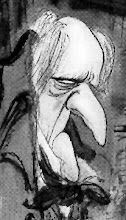
The not-so-good and the not-so-great, number 17: Charles Silver Oliver

Who he? Malcolm hears you wonder.

Well, Malcolm was not going to start here. He intended to deal with Ms Eliza Gilbert.

Who she? Malcolm hears you wonder.

For that you needs wait for number 18 in this occasional series. Coming up.

The Olivers

In Blarney House hangs a portrait of Captain Robert Oliver (right). In 1649 he had been in Cromwell's army in Ireland. What he took, he kept.

In the County Limerick, take R512 south out of Kilmallock. After seven miles or so, with Seefin Mountain to the west, you pass through the small town of Castleoliver. There is no coincidence in the name. Oliver's first grant was all the land he could see from Seefin: that amounted to nigh on 2,000 acres, extending into the County Kerry. With a bit of manipulation, Oliver increased his holding to over 20,000 acres.

With the land came the need for respectability and a dynastic home.

By 1661 Oliver was MP for the County Limerick: the family would occupy that seat for 107 of the 140 years up to the Act of Union. He built himself Clonodfoy House (from Cloch an Otbhaidhigh, also rendered as Cloghanodfoy) nearby. In 1810, his descendant, Richard Oliver, inherited (by marriage) the Yorkshire estates and collieries of Sir Thomas Gascoigne. Clonodfoy was abandoned.

The Gascoigne Olivers later built themselves a new Castle Oliver, which still stands, (left). This grandiose Scottish baronial pleasure-dome has 41 bedrooms and the largest wine-cellar -- 50,000 bottles capacity -- in Ireland) . The architect was George Fowler Jones of York.

To satisfy the burgeoning ranks of genealogy freaks, the line of succession was:
  • The Cromwellian Captain and later MP, Robert Oliver, originally of Kent, married Bridget Ormsby, daughter of Andrew Ormsby of Partney. The Ormsbys were Lincolnshire gentry: a branch of the family did well out of the Elizabethan campaigns and occupations in Ireland. In the Earl of Orrery's State Papers we find letters from Richard and Bridget Oliver. In February 1665, it seems that Bridget had come into knowledge of a Puritan plot to restore a “a sober and painful ministry”. So Orrery was able to report back to London that Robert Oliver was "a stout and honest man”. Thus the Oliver estate was secured by the 1666 Act of Settlement.
  • Their child was Charles Oliver (right) of Cloghanodfoy, who was Sheriff of Limerick and died in April 1706. In 1670 he married Elizabeth, the daughter of Sir Percy Smyth of Ballynatra.
  • Next in line, child of Charles and Elizabeth, was Colonel Robert Oliver of Cloghanodfoy (b c1671, d 1738) who was another of the family's Members of Parliament. Robert Oliver married twice: his first wife in 1702 was Katherine Southwell, daughter of Sir Robert Southwell, the Principal Secretary for Ireland. A second wife was Susanna Knight. One of these marriages, nobody seems sure which, produced:
  • Robert Oliver, another of the hereditary MPs, who died in 1745. He married a Jane Silver, daughter of (no! not that one!) John Silver.
  • Their son was Silver Oliver, MP, who married Isabella Sarah Newman of Newbury, County Cork, in 1759; and ...
  • So we are back to Charles Silver Oliver, born 1763, educated at Eton, served in the 4th Horse and the 7th Dragoons. He married Maria Elizabeth, daughter of Abraham Morris of Dunkettle, County Cork. They produced four sons and three daughters (but -- be warned -- watch this space. Our lad was a goer). He was Sheriff of Limerick in 1791-2. He duly appointed himself Commander of the Kilfinane yeomanry between 1796 and 1807.
Which brings us to:

The legal murder of Patrick Wallis

Nerves were on edge in The Year of the French, 1798.

One March Sunday morning Oliver's yeoman posse went to hunt down the local United Irishman organiser. Wallis was a tenant-farmer, and 65 years of age. Warned of the raid, Wallis lit out for the hills.

The pursuers became, literally, bogged down: one, Michael Walsh, nearly drowned in the Red Bog. Eventually, Wallis was brought to bay and arrested by Roger Sheehy. The prisoner was incarcerated at Kilfinane.

When Wallis would not name others in United Irishmen group he was whipped at the tail of a cart through Kilfinane. When he still remained silent, he was treated to the same punishment through the cattle-fair of Ballinvreena. Returned to Kilfinane, Wallis was sentenced and hanged.

Charles Silver Oliver ordered his corpse be decapitated, and the head displayed on a stake above the market square of Kilfinane. So the dead man became a local legend as "Staker" Wallis.

That was not the end of the story of Patrick Wallis

The Freeman's Journal, 3rd April, 1800:

LIMERICK, MARCH 29

On Thursday night last, a number of rebels murdered two men of the name of Sheedy, father and son, near Kilfinan, in this county; they broke open the house, and shot the old man instantly, but the son contrived to get out; they pursued and overtook him, on which the murderers told him that he ran very well after Staker, (a rebel who the young man apprehended, and was executed two years ago at Castle Oliver) but he must now run a different course, on which they put an end to his existence. The unfortunate victims were remarkable for loyalty; the son, a very fine lad, and a member of Captain Oliver's corps of yeomanry.
Nor yet the end

To mark the bicentenary of "Staker" Wallis's execution and beheading, a memorial was put up in Kilfinane High Street. It consists of a stone head.

The remains of Charles Silver Oliver

Oliver sat in the last Irish House of Commons as MP for the family's rotten borough of Kilmallock. He was thereby complicit in the Act of Union.

His father, Silver Oliver, had represented County Limerick in two Westminster Parliaments. When the father died (in 1799) Oliver was possessed of the 20,000 acres and sought the reversion of the parliamentary seat. Because of gaining the interest of Lord Clare, Charles Silver Oliver elbowed aside his own brother-in-law, John Waller (and there's a family-name worth the study), to take the seat in 1802.

Pitt's ministry considered Oliver a supporter, but not a reliable one. Oliver voted with the Opposition (4 March 1803) to investigate the Prince Regent's expenses, which Dublin Castle noted "was not like a respectable country member". Apart from that he was a persistent absentee, failing to reply to what, in modern parliaments, would be seen as "whips".

After one Parliament Oliver left the Commons. He died in October 1817.

Even then, as the next instalment will show, we are not quite finished with Charles Silver Oliver.
Sphere: Related Content

Monday, September 24, 2007

Who's Left?

The Telegraph is celebrating the Labour Conference by listing Britain's 100 most influential Leftwingers.

The first two individuals are Gordon Brown (natch) and Tony Blair. One is a recognition of the reality: the other, the Cheshire cat of British politics, (disappeared except for the rictus grin): a nod at "legacy". The precedence of one, at least, will be gone in a twelve-month.

The bronze medal spot disturbs Malcolm: Alex Salmond. This takes the Scot Nats on their face value, as a self-declared party of the Left. Malcolm demurs from reciting his numerous objections to Salmond and the Tartan Tories of the SNP being "Left". If it were so, it would be a world's first for an oil economist and his paid creature of a major Bank.

After that it's a beauty parade of Cabinet Ministers, political advisers, union bosses, the usual suspect journos, a couple of Greens, with the odd nod at blue-sky merchants on the way. All the way down to Blasted Pilger as la lanterne rouge.

A real curiosity is Gerry Adams (number 85): that must represent a double mischief, in putting him on a 'British' Left-list and so low down, too. Malcolm would have thought that Máirtín Mag Aonghusa deserved at least at much acknowledgement.

And there's Billy Bragg (number 80) as "one of the party’s elder statesman" [sic]. Bragg's proposal for sorting the Upper House has some validity. His songs are worth half an ear. Malcolm would suggest that, in the scheme of things outside the Metropolitan bubble, Dick Gaughan has been at least as significant.

Fortunately, these exercises are little more than page-fillers, inflating the vanity of those who need such, but inevitably ignoring claims of many worthier bods. Were they to be taken seriously, as a kind of check-list for precedence on Lenin's Tomb, that would be a nightmare.

All Malcolm can add is it kept him amused for a few moments, before he returned to real life.

Left!

Far more significant is the issue which prefaced the list, the problem of definition: what is the Left?
Until 20 years ago the answer would have been straightforward – to be on the left meant believing that the state could transform society into a more equal place. Today being on the left cannot be reduced to this formula because many of those who would see themselves as “left” have little time for state intervention, let alone ownership of industry or direct taxation or even equality.

Perhaps the left should be defined as “radical” or “progressive”. But such a definition is hard to sustain in an era in which revolutions have come from the right—the Thatcher revolution or the fall of the Soviet Union for example.
That caused some serious harumphing from Malcolm. He accepts that the term "Left" may be degraded, even over-elastic (as this list proves), but there remains one essential shibboleth: that little word 'equality'.

Malcolm tends to the antinomial at the best of times, but here his differentiation is precise. The Left/Right thing is not a dead metaphor. Let him recapitulate. The conceit come from the French Revolutionary Convention of 1792-94, and refers to where in the Chamber the factions seated themselves. On the Right were the Girondists. On the Left, the Montagne (named because they occupied the higher benches). A fuller description looks like this:
The Girondists were the party of orderly progress, sweetness and light the men who dreaded all violent, i.e., energetic measures... Such men, however well-intentioned they may be, must always in the long run become the tools of reaction from their timidity and hesitancy. The Girondists desired a doctrinaire republic, led by the professional middle-classes, the lawyers and literateurs. Their main strength lay in the provinces, the name being derived from the department of the Gironde, whence some, of their chief men came...
The Mountainists advocated uncompromising revolutionary principles (besides aiming to some extent, at economic equality) a vigorous policy and strong centralisation in, opposition to the Girondists, who favoured strictly middle-class republicanism, a timid and vacillating policy, and federalisation, or local autonomy. The struggle between the Mountain and the Gironde was in part a struggle for supremacy between Paris and the departments.
So far, so good? Fair enough. That section of Malcolm's argument is hereby dedicated to Bob Mitchell, distinguished son of Kinnegad, in the County Westmeath, and MA of Trinity College, Dublin, who maintained that, "History began in 1789, and everything earlier was archaeology." And then went off to study medieval trade routes.

Malcolm now humbly submits that adherence to Liberté, égalité, fraternité is as good a way as any to define a Leftist.

Vorwärts!

Fortunately, the Declaration of the Rights of Man is quite clear about two of these ideals:
  • Liberty consists in being able to do anything that does not harm others: thus, the exercise of the natural rights of every man has no bounds other than those that ensure to the other members of society the enjoyment of these same rights. These bounds may be determined only by Law [Article 4].
  • The Law is the expression of the general will. All citizens have the right to take part, personally or through their representatives, in its making. It must be the same for all, whether it protects or punishes [Article 6].
The fraternité bit amounts to: Do as you would be done by.

According to wikipedia, the French did not get their motto until later:
it was only in 1848 that Pierre Leroux revived the phrase. Pache, mayor of the commune of Paris, painted the formula “Liberté, Égalité, Fraternité, ou la mort” on the walls of the commune. It was under the Second Republic that it took on its final form and only under the Third Republic was the motto made official.
There's something seriously confusing there. Jean-Nicholas Paché was Mayor of Paris in 1793-4 and originally a Girondist. He is not to be confused (as a casual reading of that quotation might do) with the Mayor during the 1871 Commune: Jules Ferry, later twice Prime Minister in the 1880s.

Pierre LeRoux could qualify as the original woolly Christian Socialist. He is often credited for giving the French the word "socialisme" in 1834. English had recognised "socialist" the year before, when it appeared in The Poor Man's Guardian of 24th August. There are earlier uses of "socialisme" (for example The Globe of 13th February 1832), but there it implies the antithesis to "personnalité". The Encyclopedia Britannica believes that Robert Owen's followers were using "socialism" by the later 1830s.

The motto was current in Paris by 1793, and was undoubtedly widely displayed, and painted on walls. It was not original: Fénelon made the connection in the later 17th century. Robespierre was proposing it as a national motto in 1790.

Halt!
Sphere: Related Content
Subscribe with Bloglines International Affairs Blogs - BlogCatalog Blog Directory
 
Add to Technorati Favorites