Showing posts with label British Left. Show all posts

Friday, May 7, 2010

From the BBC News website:

BREAKING NEWS We have a hung
parliament. There is now no chance of the
Conservatives winning a Commons
majority.

At the behest of the late Reverend John Ebenezer Brown, the congregation will now rise and sing:
Now thank we all our God,
With heart and hands and voices,
Who wondrous things hath done,
In whom his world rejoices ...
Perhaps, after all, the British are ready for Home Rule.
Sphere: Related Content

Friday, January 8, 2010

The butcher's boy ...

No, not he who occupies so much of today's popular prints, the young:
Kirk McCambley, now 21, [who] owns a cafe in south Belfast and the visitors' centre which houses the cafe was built by the council on which Mrs Robinson sits.
The one in Malcolm's mind was young Will, of Stratford. He also had a relationship with an older woman.

Neither Will nor his older wife ever entered elective politics. Will's dad, John Shakespeare, had been a big wheel in Stratford town affairs: rising from Ale-Taster, through the civic ranks, to become the town High Bailiff. Between small town Warwickshire and Westminster Hall, it's only a matter of scale. Perhaps that was from whence came the son's appreciation of the nature of power and honour -- and since John Shakespeare went bankrupt, and sailed too close to the tax laws, an awareness of the consequences.

Once Malcolm had posted his previous effort, he found himself, third glass in hand, muttering Monmouth Hal's reflection on power.

Act IV of Henry V is a quite astonishing achievement. The King acquires a cloak and wanders through the English camp, the night before Agincourt, successively encountering:
  • old Sir Thomas Erpingham;
  • My name is Pistol call'd;
  • a conversation between Gower, the stage Englishman, and Fluellen: There is much care and valour in this Welshman;
  • the pensive common soldiers, Bates and Williams, perturbed about the future of their souls, and debating war-guilt.
Finally, Henry is alone. We then have a superb reflection on the experience of absolute power, written by one who never knew it:
Upon the king! let us our lives, our souls,
Our debts, our careful wives,
Our children and our sins lay on the king!
What are the rewards of this absolute power?
What infinite heart's-ease
Must kings neglect, that private men enjoy!
And what have kings, that privates have not too,
Save ceremony, save general ceremony?
Henry recognises the limits of his power, and the psychological cost of exercising it. It is one of the most potent poetic flights of Will, the butcher of Stratford's son:
I am a king that find thee, and I know
'Tis not the balm, the sceptre and the ball,
The sword, the mace, the crown imperial,
The intertissued robe of gold and pearl,
The farced title running 'fore the king,
The throne he sits on, nor the tide of pomp
That beats upon the high shore of this world,
No, not all these, thrice-gorgeous ceremony,
Not all these, laid in bed majestical,
Can sleep so soundly as the wretched slave,
Who with a body fill'd and vacant mind
Gets him to rest, cramm'd with distressful bread;
Never sees horrid night, the child of hell,
But, like a lackey, from the rise to set
Sweats in the eye of Phoebus and all night
Sleeps in Elysium; next day after dawn,
Doth rise and help Hyperion to his horse,
And follows so the ever-running year,
With profitable labour, to his grave:
And, but for ceremony, such a wretch,
Winding up days with toil and nights with sleep,
Had the fore-hand and vantage of a king.
In all, one sentence: twenty four lines; 185 words in a rising crescendo. The ghost of Kit Marlowe, the anarch, the machiavel, the atheist, left his imprint here.

Put yourself at Bankside, the Globe Theatre, that Spring of 1599. The great tragedian, Richard Burbage, delivers the lines. There is war in Ireland. The body politic is the monarch. The long, largely peaceful and prosperous reign of Elizabeth I is clearly moving to its inevitable end. What happens next? Her health and authority are what kept us all safe. Can we afford any indecision in one so great?

Or would we be better ...

... with a philosopher king? To which ideal, and whose innate inadequacies, Will of Stratford would return repeatedly in the next few years.

Retrospect

Of the British leaders of Malcolm's life, who would appreciate this literate perspective?

Churchill's Harrovian days would have beaten it into him: he had the mental agility to learn appreciation of its implications (and the Burbage rhythms) later. Macmillan was a delightfully well-read man. On the other side of the hedge, later, the best Prime Minister Britain (and the Labour Party) never had -- Major Healey -- would have been well capable. Probably, too, his antithesis, Tony Benn.

And who else? Sphere: Related Content
A homophone to start the day ...

From the morning flyer for Labour List:
After the coup: the PM is giving out election roles and hints he will "reign in Ed Balls."
Hail, the king-in-waiting? Sphere: Related Content

Monday, May 5, 2008

A little local difficulty

As the previous postings imply, Malcolm's Sunday mood was irritated and irritating. Blame it on a torn ligament and some genuine pain.
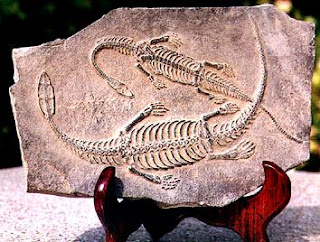
Even scrutinising X-rays (nowadays called up on a computer screen) of the foot and ankle did not lighten the tone. It left Malcolm entranced by the intricacy of countless bones, if chastened by the shadowy revelation of only old injuries, either rugby and motorcycle, but surely self-inflicted.

Later, the memory came to Malcolm of visiting Dinosaur Valley, dragged across the endless, arid monotony of the State of Utah by an enthusiastic daughter, to spend an hour or so with fossils from prehistory. The grey-scale of the screen images seemed curiously of a kind with those skeletal vestiges. Darwin vindicated, again.

It didn't make the foot more comfortable, though.

By late evening Malcolm lost it.

Now Iain Dale has many faults -- many, many faults -- but Malcolm did go a trifle over the top, and on libdemvoice, too. The combination of what and where and how makes him a trifle shame-faced today; but the final uh-oh was to realise he was in harmony with the suphurous Tim Ireland.

The issue in question was the posturing over the candidates for the Crewe and Nantwich by-election: specifically how "local" was the Tory, and whether Tamsin Dunwoody was an in-comer. In short, all the usual gesture-politics. Malcolm suggests that, with two parents in the House (together some four decades), grand-daughter of the formidable Morgan Phillips and the hardly-less-determined Baroness Norah, as well as her own time in the Welsh Assembly, Tamsin might know the score.

The irony is that Iain Dale (born in Essex, resident in Kent) continues to claim he "lived" in North Norfolk when he was the highly-unsuccessful Tory candidate there in 2005 (he increased Norman Lamb's 483 margin in 2001 to a thumping 10,606).

This all prompted Malcolm to make a further claim: that at least he had birth-ties to the North Norfolk constituency.

Norfolk-born, Norfolk-bred ..

Malcolm's alter ego originated in Wells-next-the-Sea, which in those distant days enjoyed the privilege of a Labour MP.
In 1945 Eddie Gooch, of the National Union of Agricultural Workers, displaced the squirarchical Tommy Cook, though the radical tradition had been there even before Noel Buxton took the seat for Labour back in 1929.

The North Norfolk seat later, in 1964, was inherited by Bert Hazell, then President of the NUAW. To Malcolm's delighted surprise, Bertie survives into his 102nd year, and is now the oldest surviving Parliamentarian.

It was always, sneeringly, implied that Eddie Gooch's and Bert Hazell's tenures of the constituency were helped by the local farmers who voted to keep them at Westminster, rather than causing them problems through the NUAW. That canard ignores the local tradition of radicalism, which will now become Malcolm's main theme for Labour Day.

The years the locust ate

Après Bertie, le déluge.

The complexion of the constituency changed. Employment on the land fell rapidly. That also drained much of the bitterness that had persisted since the agricultural depression of inter-war years, and the farm-workers' strikes of 1923 and 1926. Moreover, the second-homers started to arrive.

All conspired so that for the next two decades the North Norfolk constituency was the fiefdom of Ralph Howell.

Howell, like Mandelson, was one to whom taking an instant dislike saved a deal of time.

He was xenophobic, rabid, a Thatcherite before the Lady, an apologist for white racist régimes in Africa, and a supporter of the Turks in Cyprus.

He was instigator of the "Right to Work", which sounds well but (in his terms) amounted to a curious, even Stalinist notion that the unemployed should be conscripted, either into national service or be otherwise deployed by the state. Howell had come close to defining "Workfare".

Yet, he had saving graces: a good war-record, served his constituents conscientiously, was afraid of nobody (even his own Whips): a self-made (and proudly so) agri-businessman.

Then, latterly, North Norfolk got Norman Lamb. And, so far, seems quite taken with him.

George Edwards

Malcolm would like to revert to the peculiar radicalism of the area, if only because it gives him the chance to acknowledge the greatness of the Norfolk working man.

George Edwards was born in Marsham in 1850, into the grinding poverty of farm workers. At the age of six, a child of the Workhouse, he was already in employment, as a human scarecrow. Later, he fell out with his employer, and went to work in the brickfields.

He married, and became a strict Primitive Methodist: two events that together liberated him. His wife, Charlotte Corke, gave him literacy. His faith gave him political and social belief: he was yet another proof of Harold Wilson's maxim that British socialism owes more to Methodism than Marxism.

He was one of a remarkable group of men: "Comrade Joe" Sage of Kenninghall, Will Codling of Briston, George Hewitt at St Faiths, Jimmy Coe at Castle Acre, Bert Harvey at Trunch: each and every one of them black-listed and unemployable among the Norfolk farmers.

Individually and collectively these were the strong shoulders on which the farm-workers' union would be rebuilt, after the 1896 collapse of Joseph Arch's National Agricultural Workers' Union. But Edwards was the main man, on his bicycle across North Norfolk, in fair weather and foul. At first hope was vested in the Liberal Party: the Liberals took every seat in Norfolk in 1906, and Edwards was a County Councillor. Other members of the Union began to be elected to local councils, first as Liberals, then as Labour men.

During the War, the Union won the Wages Board.

In 1920, at the age of 70, George Edwards was in Parliament, as MP for South Norfolk. Conservative pressure had the Wages Board abolished; but George was back in Westminster with the 1923 minority Labour Government to have it restored.

Sam Peel


Wells had its own local champion: Sam Peel, an Methodist evangelist turned Quaker.

The Quakers have been in Wells for over three hundred years: they have a neat little brick-and-flint meeting house on Church Street (see left), doubtless regarded as eminently-convertible among all the nouveau-richery and 4x4s down for the weekend.

Peel, for most Wells folk of Malcolm's childhood, was the personification of Quakery.

What is about printers that they turn radical?

Peel started with a Men's Adult School for the Workers' Educational Association, teaching grown men to read and write. Then Sam was:
  • onto the town Council, attacking slum housing, which meant taking on a whole range of vested interests, including the Holkham Estate of Lord Leicester;
  • on the Executive of the NUAW, and then onto the Wages Council;
  • onto the Board of Guardians, arguing for improved support for widows;
  • onto the local Bench of Magistrates;
  • running the local War Pensions committee.
In 1920 he was elected to the County Council, effectively on a platform of housing and health, but soon switched to education: he was Chairman of Education for the County for 23 years.

Sam was universally and properly admired and honoured, a rumpled and cherubic rustic Clem Attlee. He was not necessarily equally liked.

He remained a staunch supporter of temperance, but presided at the Magistrates' bench at Walsingham for the brewster sessions. He regularly set up his soapbox on the Quay at Wells, to denounce the demon drink. Wells, which still boasted over a dozen pubs in the post-WW2 period, was -- as the old street maps of lanes and ginnels show -- a Viking town. Local tendencies ran more to rapine and pillage, washed down with quantities of Bullards, Steward and Patteson, or (in cases of desperation, Morgans from Ted Stenning at the Vine in High Street): and that was only the distaff side.

Still, he was one of an Olympian kind that long since went out of production: decently, they named the local secondary school for him.

All in all, Bank Holiday Monday has been
a less painful, more reflective day
for our resident philospher ...

... though any posting that involves
both dinosaurs and Tories
severely tempts fate.

Sphere: Related Content

Monday, September 24, 2007

Who's Left?

The Telegraph is celebrating the Labour Conference by listing Britain's 100 most influential Leftwingers.

The first two individuals are Gordon Brown (natch) and Tony Blair. One is a recognition of the reality: the other, the Cheshire cat of British politics, (disappeared except for the rictus grin): a nod at "legacy". The precedence of one, at least, will be gone in a twelve-month.

The bronze medal spot disturbs Malcolm: Alex Salmond. This takes the Scot Nats on their face value, as a self-declared party of the Left. Malcolm demurs from reciting his numerous objections to Salmond and the Tartan Tories of the SNP being "Left". If it were so, it would be a world's first for an oil economist and his paid creature of a major Bank.

After that it's a beauty parade of Cabinet Ministers, political advisers, union bosses, the usual suspect journos, a couple of Greens, with the odd nod at blue-sky merchants on the way. All the way down to Blasted Pilger as la lanterne rouge.

A real curiosity is Gerry Adams (number 85): that must represent a double mischief, in putting him on a 'British' Left-list and so low down, too. Malcolm would have thought that Máirtín Mag Aonghusa deserved at least at much acknowledgement.

And there's Billy Bragg (number 80) as "one of the party’s elder statesman" [sic]. Bragg's proposal for sorting the Upper House has some validity. His songs are worth half an ear. Malcolm would suggest that, in the scheme of things outside the Metropolitan bubble, Dick Gaughan has been at least as significant.

Fortunately, these exercises are little more than page-fillers, inflating the vanity of those who need such, but inevitably ignoring claims of many worthier bods. Were they to be taken seriously, as a kind of check-list for precedence on Lenin's Tomb, that would be a nightmare.

All Malcolm can add is it kept him amused for a few moments, before he returned to real life.

Left!

Far more significant is the issue which prefaced the list, the problem of definition: what is the Left?
Until 20 years ago the answer would have been straightforward – to be on the left meant believing that the state could transform society into a more equal place. Today being on the left cannot be reduced to this formula because many of those who would see themselves as “left” have little time for state intervention, let alone ownership of industry or direct taxation or even equality.

Perhaps the left should be defined as “radical” or “progressive”. But such a definition is hard to sustain in an era in which revolutions have come from the right—the Thatcher revolution or the fall of the Soviet Union for example.
That caused some serious harumphing from Malcolm. He accepts that the term "Left" may be degraded, even over-elastic (as this list proves), but there remains one essential shibboleth: that little word 'equality'.

Malcolm tends to the antinomial at the best of times, but here his differentiation is precise. The Left/Right thing is not a dead metaphor. Let him recapitulate. The conceit come from the French Revolutionary Convention of 1792-94, and refers to where in the Chamber the factions seated themselves. On the Right were the Girondists. On the Left, the Montagne (named because they occupied the higher benches). A fuller description looks like this:
The Girondists were the party of orderly progress, sweetness and light the men who dreaded all violent, i.e., energetic measures... Such men, however well-intentioned they may be, must always in the long run become the tools of reaction from their timidity and hesitancy. The Girondists desired a doctrinaire republic, led by the professional middle-classes, the lawyers and literateurs. Their main strength lay in the provinces, the name being derived from the department of the Gironde, whence some, of their chief men came...
The Mountainists advocated uncompromising revolutionary principles (besides aiming to some extent, at economic equality) a vigorous policy and strong centralisation in, opposition to the Girondists, who favoured strictly middle-class republicanism, a timid and vacillating policy, and federalisation, or local autonomy. The struggle between the Mountain and the Gironde was in part a struggle for supremacy between Paris and the departments.
So far, so good? Fair enough. That section of Malcolm's argument is hereby dedicated to Bob Mitchell, distinguished son of Kinnegad, in the County Westmeath, and MA of Trinity College, Dublin, who maintained that, "History began in 1789, and everything earlier was archaeology." And then went off to study medieval trade routes.

Malcolm now humbly submits that adherence to Liberté, égalité, fraternité is as good a way as any to define a Leftist.

Vorwärts!

Fortunately, the Declaration of the Rights of Man is quite clear about two of these ideals:
  • Liberty consists in being able to do anything that does not harm others: thus, the exercise of the natural rights of every man has no bounds other than those that ensure to the other members of society the enjoyment of these same rights. These bounds may be determined only by Law [Article 4].
  • The Law is the expression of the general will. All citizens have the right to take part, personally or through their representatives, in its making. It must be the same for all, whether it protects or punishes [Article 6].
The fraternité bit amounts to: Do as you would be done by.

According to wikipedia, the French did not get their motto until later:
it was only in 1848 that Pierre Leroux revived the phrase. Pache, mayor of the commune of Paris, painted the formula “Liberté, Égalité, Fraternité, ou la mort” on the walls of the commune. It was under the Second Republic that it took on its final form and only under the Third Republic was the motto made official.
There's something seriously confusing there. Jean-Nicholas Paché was Mayor of Paris in 1793-4 and originally a Girondist. He is not to be confused (as a casual reading of that quotation might do) with the Mayor during the 1871 Commune: Jules Ferry, later twice Prime Minister in the 1880s.

Pierre LeRoux could qualify as the original woolly Christian Socialist. He is often credited for giving the French the word "socialisme" in 1834. English had recognised "socialist" the year before, when it appeared in The Poor Man's Guardian of 24th August. There are earlier uses of "socialisme" (for example The Globe of 13th February 1832), but there it implies the antithesis to "personnalité". The Encyclopedia Britannica believes that Robert Owen's followers were using "socialism" by the later 1830s.

The motto was current in Paris by 1793, and was undoubtedly widely displayed, and painted on walls. It was not original: Fénelon made the connection in the later 17th century. Robespierre was proposing it as a national motto in 1790.

Halt!
Sphere: Related Content
Subscribe with Bloglines International Affairs Blogs - BlogCatalog Blog Directory
 
Add to Technorati Favorites